The Scottish Starch Baron of Merimbula: The Story of Munn's Maizena
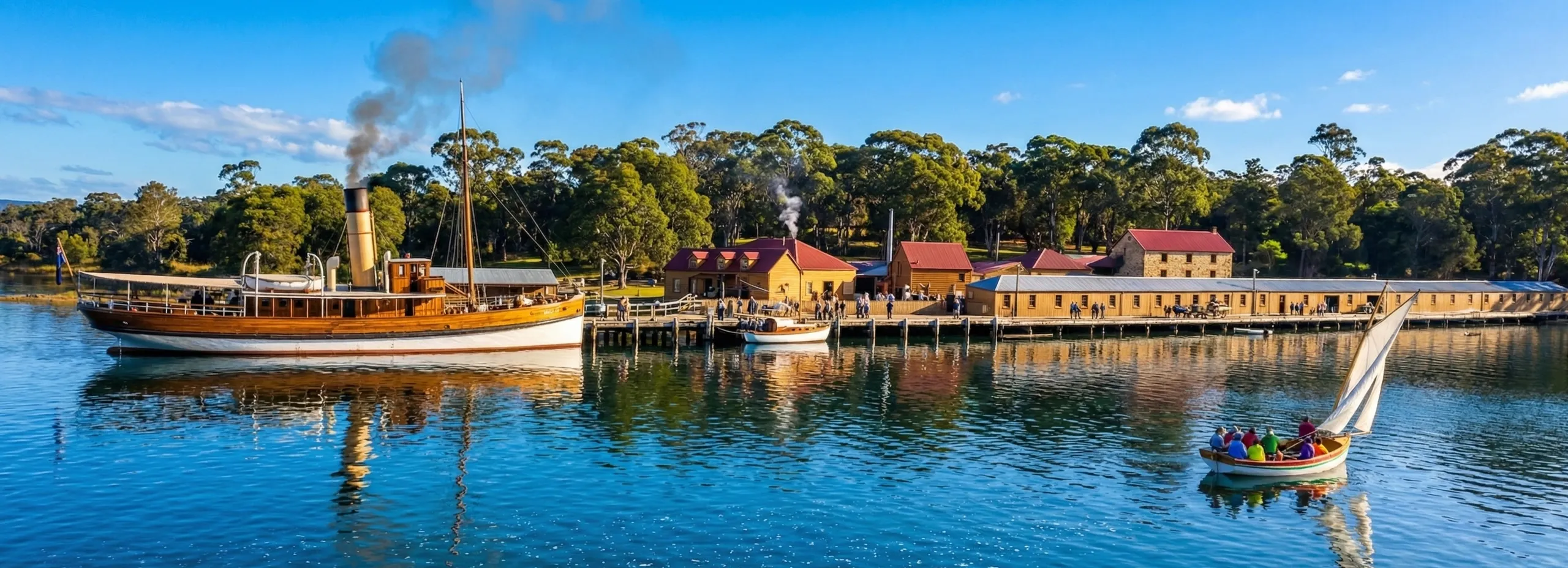
Looking out over the calm water at Merimbula today, it’s hard to picture the smoke and bustle of industry along the shore. But in the late 1800s, this quiet coastal village was the beating heart of a business built on cornflour and pigs. This is the story of Matthew Munn, the man who turned a run-down mill into a thriving industry.
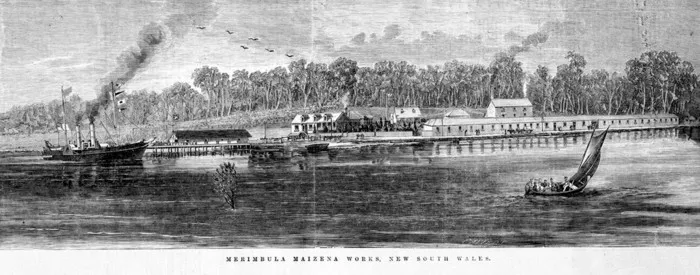
Munn’s Maizena Works, Merimbula, in 1869. Image via South Coast History.
From Paisley to the pastoral
Matthew Munn didn’t start out as a miller. He was a shawl maker from Paisley in Scotland, and he arrived in Melbourne in 1856. His move into farming and milling came while he was working for Brown & Polson, where he picked up the know-how for making cornflour.
He turned his attention to Merimbula when he heard about an unused flour mill sitting idle in the village. There was one very good reason the spot suited him.
Why Merimbula? Wheat was prone to disease in the region, but white maize grew exceptionally well in the area.
Building the “Maizena” business
Munn was a man of action. With backing from the Twofold Bay Pastoral Association and well-known figures like Thomas Mort and Sir William Montagu Manning, he set about transforming the old mill. He went back to Scotland to buy special grinding stones and new machinery to refit the mill for cornflour.
By 1866 he had moved his family to Merimbula, living in a small cottage first built for the Pastoral Association. Production of “Maizena” (a brand name for cornflour) officially began in 1867.
The operation by the numbers
This was no little local project. For its time it was a serious industrial operation, turning out about 3 tons of cornflour every week. Nothing went to waste either. The leftover “corn bran” was fed to 500 pigs kept in a yard behind the mill, and they were fattened for bacon and ham that was shipped up the coast to Sydney.
A lasting legacy: “Courunga”
As the business grew, Munn bought out local maize farmers to secure his supply. He also set out to make his mark on the town with a grand home, “Courunga”, which he was building as a wedding present for his son, Armstrong. It’s still standing today as a private home known as the Tower House.
The end of an era
Sadly, Matthew Munn didn’t live to see it finished. He died in 1873 after a recurring illness, while the house was still being built.
He left the “Munn’s Maizena & Starch Company” to his son Armstrong, who inherited a big estate that included the mill, shops, workers’ housing and five farms around it. The smoke no longer rises from the old mill, but the Tower House still stands as a reminder of the Scottish shawl maker who saw what the white maize of Merimbula could do.
The Ballad of Maizena Munn
To go with the story there’s now an original song, “The Ballad of Maizena Munn”, recorded with a live pub feel using Suno. It follows Matthew Munn from Paisley to Melbourne and on to the Maizena mill on Merimbula Lake, bringing together the grinding stones, the pigs in the yard and the Courunga tower in one story.
You’ll hear the weaver from Paisley become a miller on the Sapphire Coast, and the mill wheel start turning on the edge of Merimbula Lake. There’s the bran feeding hundreds of pigs and the bacon leaving by steamer, and Courunga looking down over the inlet and the busy yards. The chorus is built around “great southern land”, so feel free to sing along. Have a listen and picture the mill yard, the tower and the lake as you read.
From the looms of Paisley town, with shawl dust in his clothes
To a hard bright sun in Melbourne streets, where the Yarra river flows
Matthew Munn with weaver’s hands, learned to grind the corn
Far from Clyde and winter rain, a new trade there was born
Word rode down the coastal track, past Eden’s rolling sand
Of a tired old mill at Merimbula, in this great southern land
Wheat lay thin and seasons failed, yet white maize loved that ground
He smiled and saw the mill wheel turn, before it made a sound
So light that fire, stoke that flame
Raise your glass and call his name
Ho, ho, stamp your feet, clap your hands in time
White gold grinding on the Merimbula line
Load that dray for Twofold Bay, hear the old steam roar
In this great southern land by the Maizena shore
Ho, ho, hear the wheel, feel the timbers hum
Whole bay singing for Maizena Munn
From the mill yard mud to the Sydney store
In this great southern land they called for more
Back across the water wide, the heavy stones set sail
Deep in the hold with rope and tar, through salt and southern gale
Kennedy from Carriage Hill, followed Munn down here
Iron teeth and belts and shafts, the grinding song grew near
Engines blew their warming breath, smoke over lake and town
New sheds rose and cogs lined up, the old wheel turned around
Three tons rolling every week, bright starch like river sand
Maizena in the baker’s hands across the hungry land
Feel that floor begin to shake
Hear that grinding song awake
Ho, ho, stamp your feet, clap your hands in time
White gold grinding on the Merimbula line
Load that dray for Twofold Bay, hear the old steam roar
In this great southern land by the Maizena shore
Ho, ho, hear the wheel, feel the timbers hum
Whole bay singing for Maizena Munn
From the mill yard mud to the Sydney store
In this great southern land they called for more
Bran poured down the timber chute for five tall hundreds strong
Every yard a squealing choir, a low and muddy song
Smoke curled up from boiling vats, bacon on the rack
Steamers at the wooden wharf took half those carcasses back
Deckhands joked at Merimbula, in shirts all stained and worn
“Pig and Whistle” on their lips from dusk to early morn
Barrels rolled and hams were swung, bound for city trade
While the mill stones dreamed of corn by the river where they stayed
On the hill above the inlet, tower house of stone
Courunga watched the inlet lights and all the works below
A wedding gift for Armstrong there, a father’s rising pride
Bay breeze moved through every room, slow and full and wide
But the body tires before the dream, and breath runs thin and slow
Company seals and paper shares, a last long evening glow
Some nights that tower holds a sound no doctor understands
Old Munn hearing his mill roll on in this great southern land
Ho, ho, stamp your feet, clap your hands in time
White gold grinding on the Merimbula line
Load that dray for Twofold Bay, hear the old steam roar
In this great southern land by the Maizena shore
Ho, ho, raise your voice, let the rafters ring
Great southern land, hear the harbour sing
From the weaver’s cloth to the miller’s stone
To the tower on the hill where the lights still shone
Ho, ho, one more round for the working crew
For the pigs and the smoke and the starch they drew
For the mill yard ghosts and the shifting sand
In this great southern land, in this great southern land